Bringing on new practices into your multi-location health or wellness organization introduces a maze of complications for patient transition, staff integration, and brand alignment. But lurking...
Bringing on new practices into your multi-location health or wellness organization introduces a maze of complications for patient transition, staff integration, and brand alignment. But lurking beneath visible challenges lies a crucial component: the technology ecosystem powering every part of your business.
Whether you need a location to retain its branding and maintain its existing website or have to plan a redesign to join your platform, you need to understand their tech stack. Once you identify all the layers of functionality and how the pieces interact, you’re equipped to troubleshoot issues, maintain performance and security, and enhance your operation.
All of these essential benefits are impossible without proper documentation of your tech stack. Without an expert understanding of the technology behind all your locations, your organization faces unnecessary risks, inefficiencies, and lost opportunities.
The Challenge of Documenting Technology for Health Organizations
As you work to absorb a new practice into your larger organization, fundamental knowledge gaps quickly become operational bottlenecks — or worse. Picture this: Your organization acquires a thriving seven-location practice. The transition seems straightforward until you need to update their appointment booking system or integrate patient reviews with your main website. When you contact their team, no one can explain how their digital systems work together or who has access to what.
This isn’t uncommon. Many health practices rely on different marketing firms and vendors or have experienced staff turnover. As a result, any practice you acquire may have critical knowledge gaps about their own technology infrastructure.
The Real Cost of Tech Stack Blindness
When you lack visibility into the technology infrastructure of your organization or locations you’re acquiring, the consequences extend far beyond IT headaches:
Operational inefficiencies: Simple website, API, or platform updates require extensive troubleshooting. Every new integration takes months instead of weeks.
Marketing bottlenecks: Fragmented systems lead to an inability to quickly update location information or coordinate messaging across properties.
Security and compliance vulnerabilities: Without understanding your security status, you risk non-compliance with HIPAA standards due to faulty data handling and data breaches. As you fail to maintain every system, plugins become outdated and security patches go uninstalled.
Wasted resources: Your organization is at risk of paying for redundant systems, unnecessary vendor relationships, and inefficient processes across locations.
Among the most damaging costs of poorly integrated systems is reflected on the patient experience. When your booking systems, location information, and doctor details aren’t synchronized, patients encounter frustration at every digital touchpoint.
Effective Documentation Transforms Operations
When we say “documentation” we’re talking about more than a static record of a technical infrastructure. For the purpose of wrangling your tech stack, create a comprehensive understanding of how your technology functions as an ecosystem.
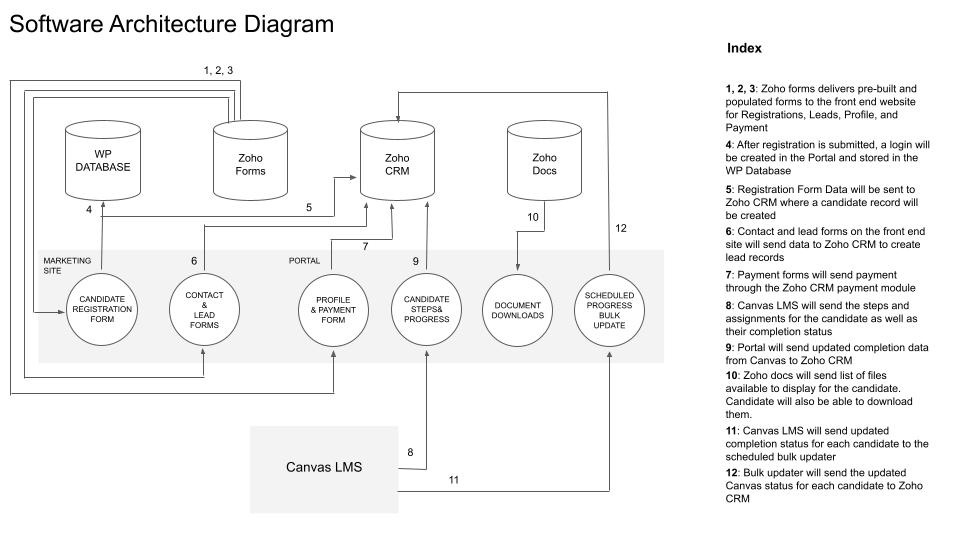
If this kind of documentation doesn’t exist, you’re going to need expert assistance to research and diagram the systems your locations depend on. GLIDE Health’s approach to tech stack documentation for multi-location health organizations creates a visual representation that makes complex systems understandable to both your technical and non-technical stakeholders.
Effective tech stack documentation includes:
Flow diagrams illustrating the process of creating new subsites.
Detailed steps with relevant links and screenshots.
API documentation showing how information moves between systems.
Security protocols and access hierarchy.
Maintenance schedules and responsibilities.
These diagrams become quite complex due to the numerous interconnected elements. A typical diagram will account for payment gateways, website forms, backend processing, refund systems, and all other technologies that support your business.
Comprehensive documentation outlines how all these pieces work together, and it becomes especially valuable during staff transitions. When executives or IT personnel join your organization, comprehensive tech stack documentation provides immediate clarity about the details of your infrastructure so new hires hit the ground running.
Anatomy of Your Health Organization’s Tech Stack
A modern health organization’s technology infrastructure is more complex than just a website and booking system. In reality, a full tech stack includes:
Hosting and platform infrastructure: The foundation supporting all digital assets that requires robust security and ability to scale as needs arise.
Content management systems: Platforms such as WordPress as well as specialized plugins or custom code they may require.
Doctor and location APIs: Systems that pull database details such as provider information, physician specialties, and other details.
Maps integration: Allows you to group practices properly and aid in patient navigation.
Review aggregation: Systems that compile and display reviews from Google, Yelp, and medical referral sites.
Payment processing: Secure, HIPAA-compliant transaction handling.
Appointment booking flows: Patient scheduling systems integrated across locations.
Each of these components must work together while maintaining strict security standards. For example, HIPAA compliance and general best practices dictate that personal information should be stored in secure backend systems and not in website databases.
Visualizing this complex ecosystem is invaluable for multi-location health organizations. A proper tech stack diagram allows all levels of leadership to see how their systems integrate, communicate, and exchange information. This visual representation helps everyone on your team understand the technological foundation of their organization.
Beyond Documentation: How to Create a Living Tech Ecosystem
While documentation forms the foundation of more effective tech stack management, creating a standardized, scalable infrastructure should be the ultimate goal for your multi-location health organization.
Achieving this level of standardization requires both technical expertise and industry-specific knowledge. Your technology partners need to understand not just the code but also the specific requirements of health and wellness organizations, including patient privacy, HIPAA regulations, and appointment booking workflows.
This specialized expertise is why working with GLIDE Health delivers better results than general web development agencies. Plus, you don’t have to invest the time and budget to assemble a multi-skilled in-house team to piece all your disparate systems together.
Doing this properly requires developers who are familiar with the many technologies at the root of your health organization. It takes a complete team with diverse knowledge and experience to truly understand your entire ecosystem and maintain it effectively.
How to Secure Your Multi-Location Technology Foundation
If you are already struggling with the integration of recently acquired locations, start by assessing your current documentation status:
Inventory your technical infrastructure: What systems do you have documented? Where are the gaps?
Identify vulnerabilities: Conduct security audits and assessments to evaluate the current state of your systems, tools, and APIs.
Create standardization goals: What should your ideal technology ecosystem look like?
Evaluate outside partners: Look for comprehensive expertise in technical development and how technology supports your health business.
The most successful multi-location health organizations recognize that robust technology infrastructure enables both operational efficiency and stronger marketing performance. By investing in proper documentation and standardization, you create a scalable foundation to support your business goals.
Your technology ecosystem is too important to leave to piecemeal solutions or anything less than expert support. If you’re ready to explore how a well-documented, standardized technology infrastructure will deliver a significant competitive advantage across all locations, we should talk about what’s next.
In this installment of our deep dives into the website updates you should focus on, I am going to talk about simple changes you can make on your site...